salakhalimunmountain.com – Trekking through the monsoon-soaked rainforests of Mount Salak and Halimun National Park during the rainy season brings an unmatched atmosphere of lush greenery, rushing rivers, and misty ridge lines. However, the wet season also presents one of the most persistent backcountry challenges in West Java: relentless, saturated humidity. When atmospheric moisture levels hover near 100%, wet gear refuses to dry, condensation drips inside tent walls, and moisture slowly seeps into sleeping bags and electronics. Mastering the skill of managing camp humidity in the monsoon season is essential for staying warm, preserving your gear, and maintaining comfort throughout high-humidity jungle expeditions.
High humidity in tropical mountain camps is caused by a combination of constant precipitation, saturated ground moisture, ambient fog, and body heat respiration inside closed shelters. Without proper moisture control strategies, ambient wetness can lead to chilled nights, skin chafing, and ruined equipment. By implementing disciplined dry-zone routines, maximizing airflow dynamics, and deploying moisture-barrier tactics, you can turn your monsoon camp into a dry, comfortable sanctuary.
Establishing Strict Dry-Zone Protocols Inside Camp
The single most important rule of monsoon camping is establishing a rigid boundary between your wet outdoor gear and your dry sleeping zone. Once wet moisture enters your inner shelter, it is almost impossible to evaporate in 100% humidity environments.
Designate your shelter’s vestibule or an outer tarp porch as the “transition zone.” Before stepping inside your tent or beneath your primary tarp shelter, strip off soaked outer shells, muddy trekking boots, wet socks, and damp gaiters. Leave wet footwear, rain jackets, and muddy pack covers outside the living area. Store these items in breathable mesh bags or hang them under an outer tarp wing so they can drip-dry without contaminating your sleeping quarters with ground moisture.
Protecting Core Insulation and Dry Sleepwear
Inside your backpack, pack every piece of dry clothing, your sleeping bag, and critical electronics inside heavy-duty waterproof dry bags or thick, sealed trash compactor liners. Never allow damp trekking clothes to touch your dry sleepwear.
Keep one dedicated set of dry clothes—such as lightweight synthetic thermal baselayers and dry wool socks—strictly reserved for inside your shelter. Even if you must step back out into driving rain the next morning in cold, wet trekking clothes, keeping your sleepwear bone-dry guarantees restful recovery and guards against nighttime hypothermia.
Maximizing Cross-Ventilation and Condensation Control
A common mistake when camping during heavy monsoon rain is completely sealing all tent vents and flaps to keep water out. While this keeps rain off, it traps warm, moisture-laden breath inside the shelter. Overnight, this trapped breath condenses against the cool fabric, creating heavy condensation droplets that drip onto your sleeping pad and gear.
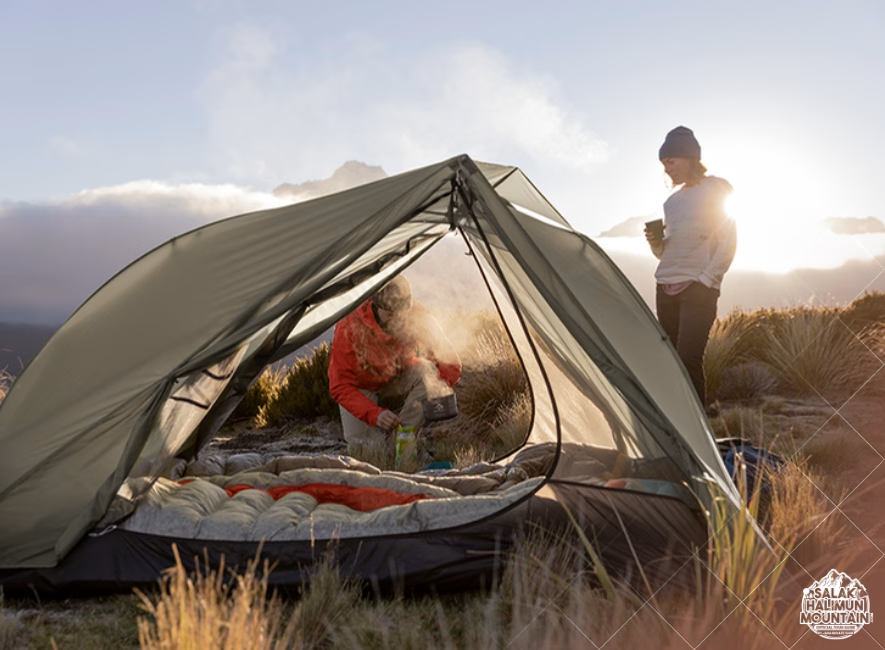
To prevent condensation buildup, prioritize cross-ventilation. Choose double-walled tents with high mesh content or pitch open-air tarp shelters with high-clearance A-frame geometries that encourage continuous airflow. Open top peak vents and guy out rainfly vestibules slightly away from the tent body to draw fresh air through the shelter, sweeping out damp respiration before it converts into internal moisture droplets.
Managing Ambient Ground Vapor with Moisture Barriers
During the monsoon, the rainforest floor becomes fully saturated with water. Saturated earth continuously releases ground vapor upward into your camp footprint, accelerating humidity accumulation inside your shelter.
Lay a thick, waterproof footprint or ground tarp underneath your tent floor or hammock setup, extending slightly inside your living perimeter. This impermeable layer acts as a ground vapor barrier, blocking soil moisture from evaporating up into your floor material. Ensure no edges of the ground tarp extend beyond the overhead rainfly, as exposed edges will catch falling rain and channel water directly under your shelter floor.
Active Moisture Absorption and Gear Maintenance
While natural ventilation does the heavy lifting, active moisture-management tools help keep sensitive gear, cameras, and optics safe from humidity damage inside wet forest camps.
Pack several reusable silica gel packets or small desiccant pouches inside sealed dry bags containing your phone, power banks, camera lenses, and field notebooks. These packets actively pull ambient moisture out of small enclosed spaces, preventing lens fogging and corrosion. For damp boots and footwear left in the vestibule overnight, stuff them with dry crumpled newspaper or highly absorbent microfiber camp towels to draw out internal moisture from the shoe lining.
Handling Damp Gear During Breaks and Pack-Outs
During monsoon season, true sunshine may be rare, but taking advantage of short weather windows is key. Whenever the rain pauses and brief sun rays break through the canopy or wind gusts clear the fog, immediately hang damp tarps, socks, and pack covers on line guylines to air out.
When breaking camp in active rain, pack your wet tarp or tent rainfly in an external mesh pocket on the outside of your backpack. Never pack a soaked fly inside the main compartment alongside your dry bags, as lingering moisture will quickly migrate across gear boundaries during a long day of trekking.
Maintaining Personal Hygiene and Hydration Balance
Managing humidity extends to personal body care. Sleeping in high-humidity environments can lead to skin irritation, fungal growth, or severe chafing if skin remains damp for extended periods.
Before changing into your dry sleeping clothes, wipe down your skin thoroughly with a fast-drying microfiber towel or alcohol-free wet wipes to remove sweat, salt, and mud. Apply anti-chafing balm or zinc-based powder to high-friction areas. Even though cool, humid weather may lessen your sensation of thirst, stay well-hydrated with warm herbal teas or electrolyte mixes to support circulation and body temperature regulation through cold monsoon nights.
Managing camp humidity in the monsoon season requires discipline, smart shelter setup, and proactive moisture control. By enforcing strict dry zones, maximizing shelter ventilation, deploying ground vapor barriers, and caring for your gear, you can embrace the beauty of Mount Salak and Halimun National Park while staying dry, warm, and ready for every mile ahead.
So, if you’re ready to explore the wonders of Mount Salak Halimun, head over to our ONLINE BOOKING PAGE and let’s start planning your adventure. Or simply CLICK THIS LINK to chat with us on WhatsApp.
With our team, you’re not just getting a guide; you’re gaining a local friend who will ensure your trip is nothing short of extraordinary.